SEARCH


The latest discovery about a peculiar behavior of photons could recall the lightsaber from Star Wars: but it's a communication problem

The latest discovery about a particular behavior of photons might remind us of the lightsaber from the “Star Wars” movie saga, but it is a matter of dissemination and exposure.
As always happens in the field of quantum physics, the issue is much more complicated, and is part of the current problem of scientific dissemination which, in order to attract the public's curiosity, often tends to distort the news, and not only in the headlines.
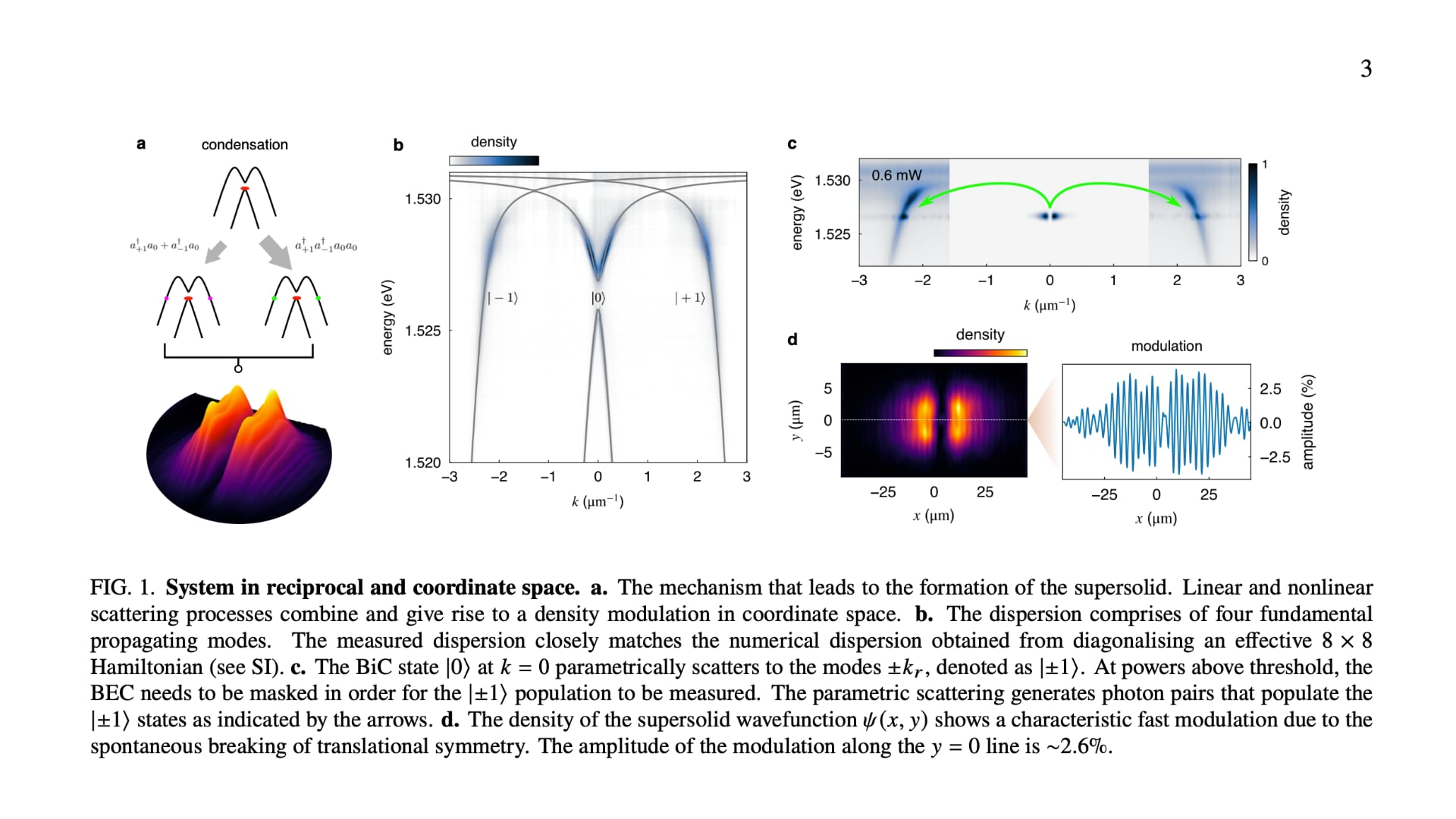
The article in question, a peer-reviewed scientific paper – that is, “reviewed by peers”, whose validity, quality and originality is assessed by one or more experts in the field – was published on 5 March 2025 in the scientific journal “Nature” (“Emerging supersolidity in photonic-crystal polariton condensates”).
Among its authors are several Italian researchers, most of whom collaborate with the CNR Nanotec – Institute of Nanotechnology in Lecce, but also with the Physics Department of the University of Pavia, with that of the University of Trento, with the Institut für Experimentalphysik und Zentrum für Quantenphysik of the University of Innsbruck (Austria), and with the Lawrence Berkeley National Laboratory in Berkeley (California).
First of all, we need to clarify the scope we are talking about: the so-called “exotic” states of matter, far removed from our everyday experience. They often require extreme conditions, such as temperatures close to absolute zero.
Furthermore, it should be noted that this is research carried out within the scope of photonics, an advanced branch of optics which, together with quantum mechanics, studies how to control the propagation of individual photons and which is making great leaps forward in terms of research and applications.

Are we talking about light moving freely in space?
Are we talking about light moving freely in space? Absolutely not.
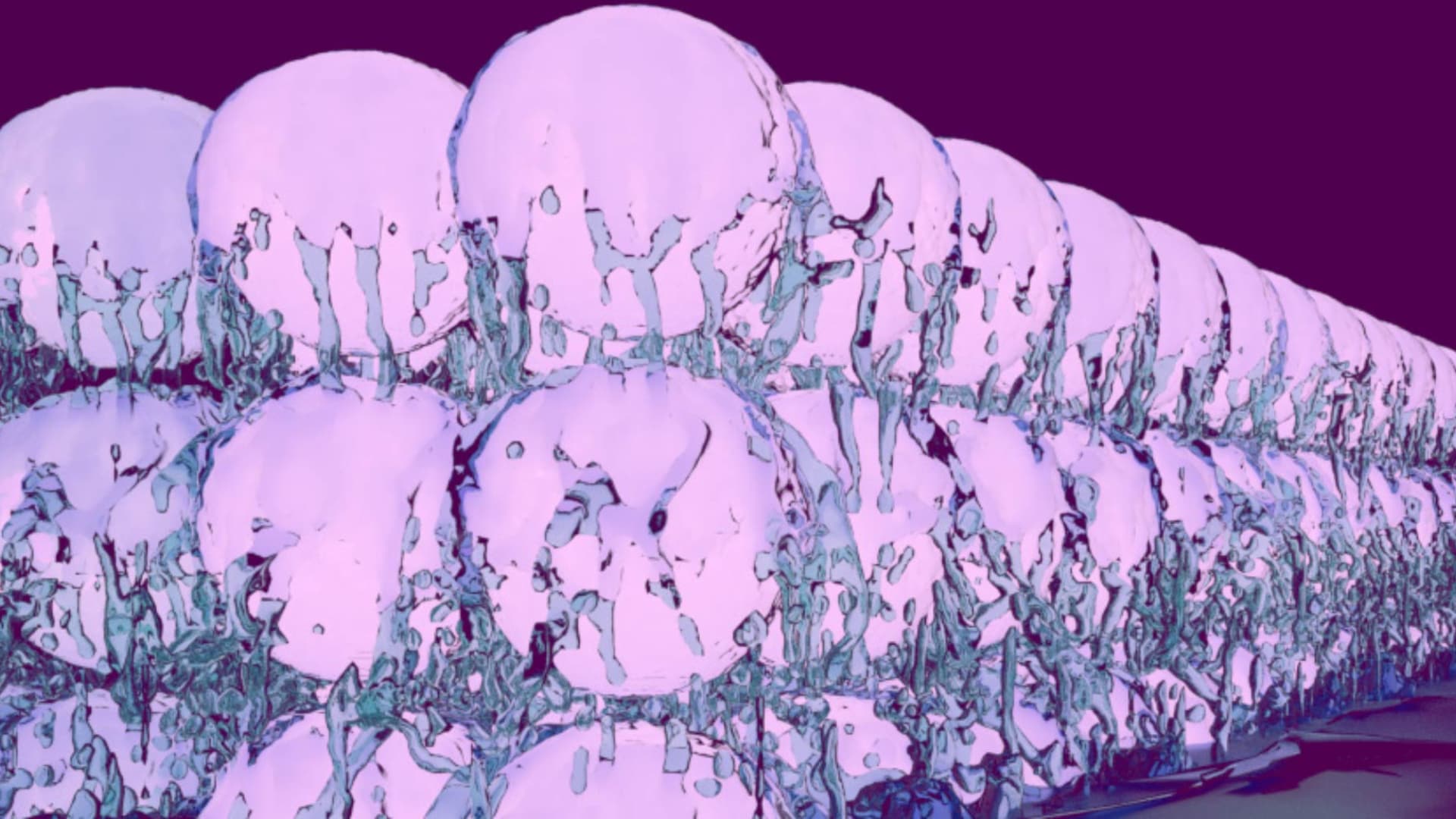
Among the images released in recent days, the one above struck me, evidently created with Artificial Intelligence, which represents a sort of three-dimensional and symmetrical "lightning" of crystallized light, almost as if physicists had managed to freeze a moment of time.
Beautiful, poetic and totally wrong.
Science popularization may sometimes use metaphors to explain a difficult concept intuitively, but it should never distort it.
The experiment in question used a Bose-Einstein condensate, an exotic state of matter, where certain behaviors that are usually relegated to the quantum world also occur at the microscopic level. But in the laboratory, at very low temperatures, in an ultra-controlled environment.
And they don't use free photons, like those that come from stars, including our sun.
We are actually talking about polaritons, which are quasiparticles.
Towards compact quantum computers thanks to… topology
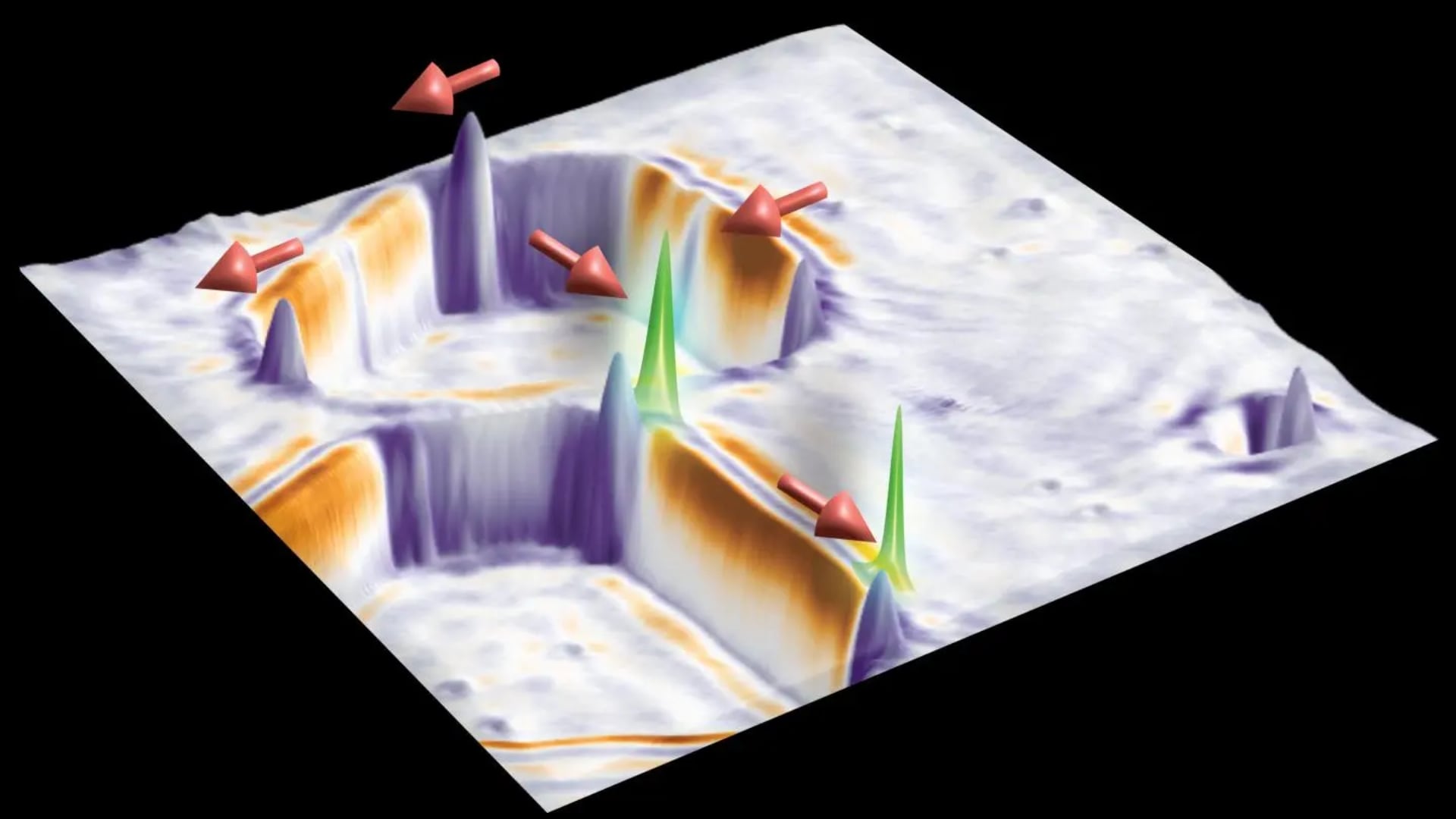
What is a quasiparticle?
It is not a “real” particle like the ones we know – among other things, the very concept of particle is being questioned by physicists, but we will talk about that another time – but it is the result of a particular interaction in particular conditions, which behaves “almost” like a particle but with special characteristics.
Quasiparticles are part of our everyday life, even if we are not aware of it: the semiconductors at the basis of all digital devices work thanks to quantum phenomena related to this concept.
When an electron is excited from the “valence band” (the orbital state in which it normally occurs) to the “conduction band” (the upper orbital state, which allows electrical conductivity) it leaves behind a so-called “hole”, which behaves like a positively charged electron.
The ratio of hole to electron creates a quasiparticle called exciton, crucial for optical phenomena in semiconductors, such as the absorption and emission of light in LEDs.
But this is just one example.
Superfluid helium: the moment of phase transition
What is a superfluid?
A superfluid is a fluid in which the viscosity can be reduced to zero, so that its particles circulate freely and without any friction. Bose-Einstein condensates are superfluids.
Let us now introduce, always in a popular way, the concept of waveguide. In superluminids, a “waveguide” is any structure in which density waves are confined and transported in a certain direction. In this experiment, the waveguide was a crystal, where quasiparticles were created by the continuously interacting set of electrons and photons, called polaritons.
In particular areas of the crystal the photons, bound inside the polaritons, presented a periodic order, a regular arrangement, as occurs in crystalline solids.
But you must not imagine them still, like balls. The phenomenon is obtained thanks to a continuous bombardment of light on the crystal, and the photons are always new, while continuing to present the ordered arrangement mentioned above. In this way a particular state of matter called supersolid.
When it is light that improves the performance of integrated circuits
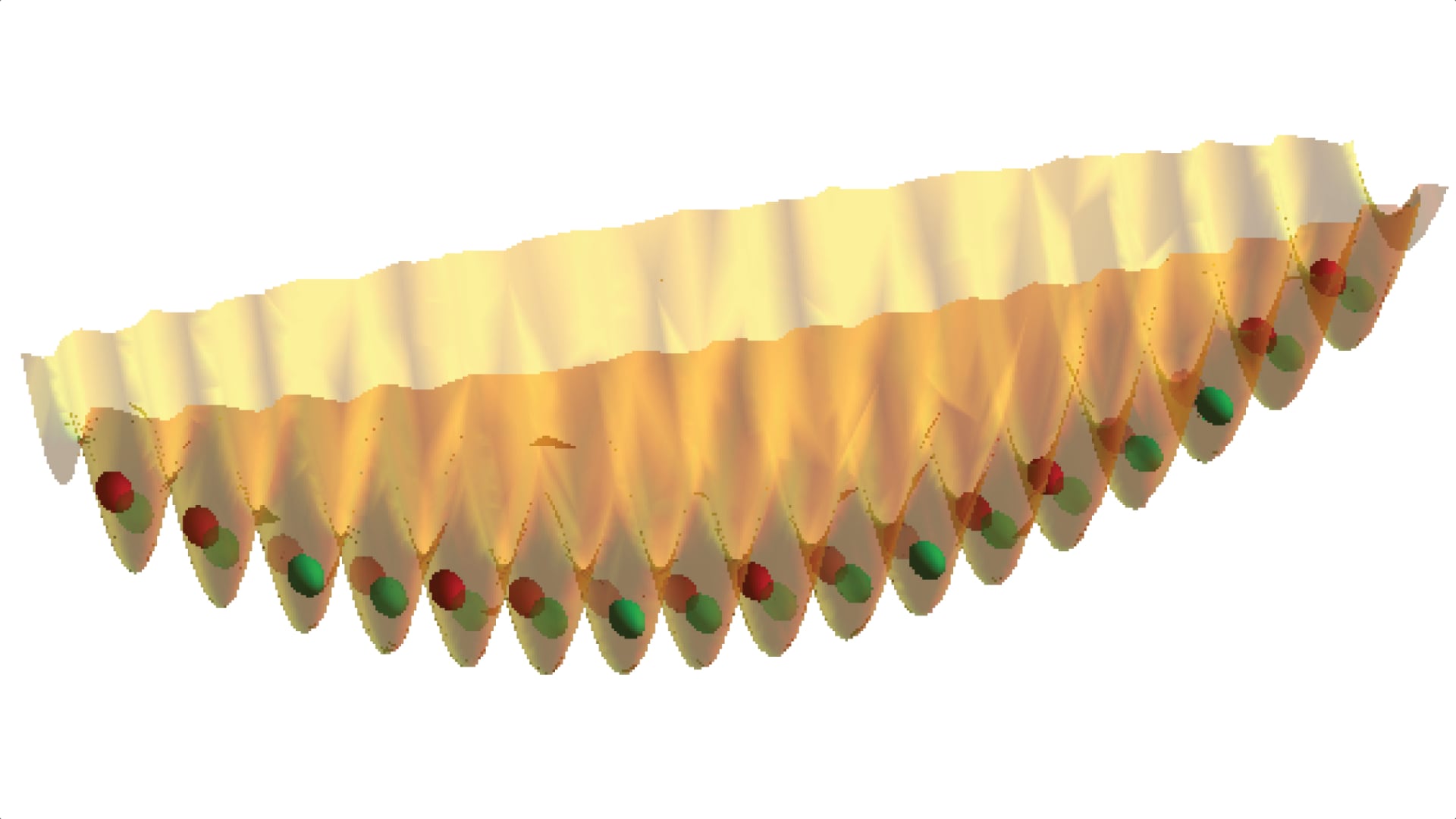
What is a supersolid?
A final effort of intuition, linked to the condition of “super solid”.
When a superfluid in particular conditions presents spatial regularities that can recall the lattice of a crystal, we speak of supersolid, where some points of greater density are arranged according to a regular pattern in three dimensions. Clearly a supersolid has nothing to do with the concept of a “solid object” that we experience in everyday reality.
This sort of “phase transition” of photons in supersolid is the crux of the article; in the past, attempts had been made to “force” these particular arrangements, but in this case the order emerged, for the first time, spontaneously. What in physics is called emerging phenomenon.
Now let's put it all together
Now that we have, at least on an intuitive level, understood the different elements of the experiment described in the article in “Nature”, we can try to understand what the researchers actually managed to accomplish.
They have managed to create a particular state of order in a superfluid, an order that as we will see could have several very interesting future applications.
And it is also important because it shows that we are increasingly able to control optical phenomena, improving in precision and efficiency.
Possible future applications
Photonics will be increasingly important in future devices.
Light, if well controlled as electronics can do with electrons today, is much faster and allows significantly lower energy consumption. This experiment could lead to the construction of ultrafast optical switches, filters and modulators based on supersolidity phenomena.
The use of polaritons in waveguides already allows for greater efficiency in the control and propagation of optical signals.
The system could be used to simulate condensed matter phenomena, such as the dynamics of density waves in atomic supersolids. It could also enable the study of new quantum states of matter.
The ability to precisely measure density coherence and modulation could lead to new quantum imaging techniques, improving the sensitivity of optical devices and precision sensors. As well as new theoretical and experimental tools for understanding exotic matter phenomena, such as those present in neutron stars or cosmological systems.
The implementation of supersolidity in a polariton system suggests possibilities for new optical qubits or systems for the quantum computingQuantum computers are considered the most promising future to greatly surpass the already very powerful current computing capabilities.
Finally, emergent properties of long-range order could be exploited in quantum neural networks and in neuromorphic computing, an approach to information processing inspired by the structure and functioning of the human brain.
The goal is to create hardware systems and algorithms that mimic the behavior of neurons and synapses, making calculations more energy efficient and more suitable for learning and recognition tasks. Thus, significantly improving the performance of current Artificial Intelligences.
Towards an artificial quantum neuron thanks to photons

The dilemma of scientific dissemination
We therefore have a further example of the so-called disclosure dilemma. How far can we simplify the most complex and exotic research topics, to make them understandable to non-experts, without distorting them and losing all scientific solidity?
In my own small way I always try to be as correct as possible, especially when the topic is complex as in this case. Which obviously requires a certain amount of effort on the part of the reader as well as the popularizer; a sort of implicit collaboration.
Perhaps this is the problem: we tend to lose confidence in the reader, leveling everything down. A bit like the screenwriters of Hollywood blockbusters do. On the other hand, sometimes we expect a level of simplification that is simply not possible for certain topics.
Moreover, disseminating information on social media has become extremely difficult: every time hundreds, if not thousands, of comments appear from those I personally call “Laughing Pigeons” (Penitus Ridens Columba). These are people who have zero knowledge of the topics discussed, but they claim to discuss them as experts, ridicule the results or even arrogantly question the very existence of specific technologies. The common factor that binds these people is the thought
“what I don’t understand, doesn’t exist.”
In my opinion, the issue could be largely resolved only if we were able to mend the relationship of trust between those who write (us journalists, editorialists and popularizers) and those who read us. If Innovating News Whether he's succeeding or not is up to you to say.